Feed on
Posts
Comments

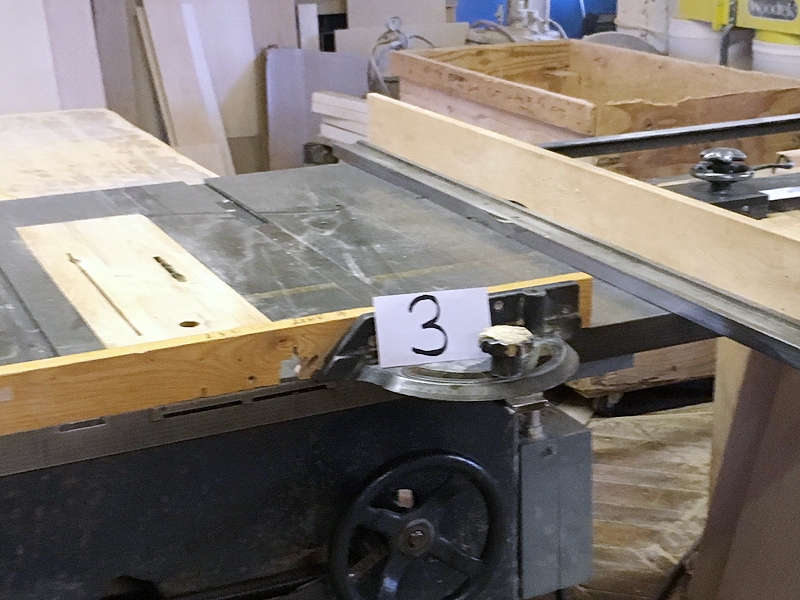
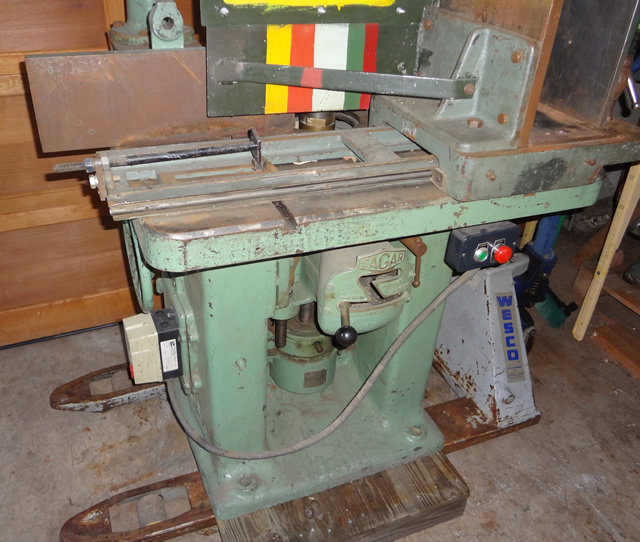
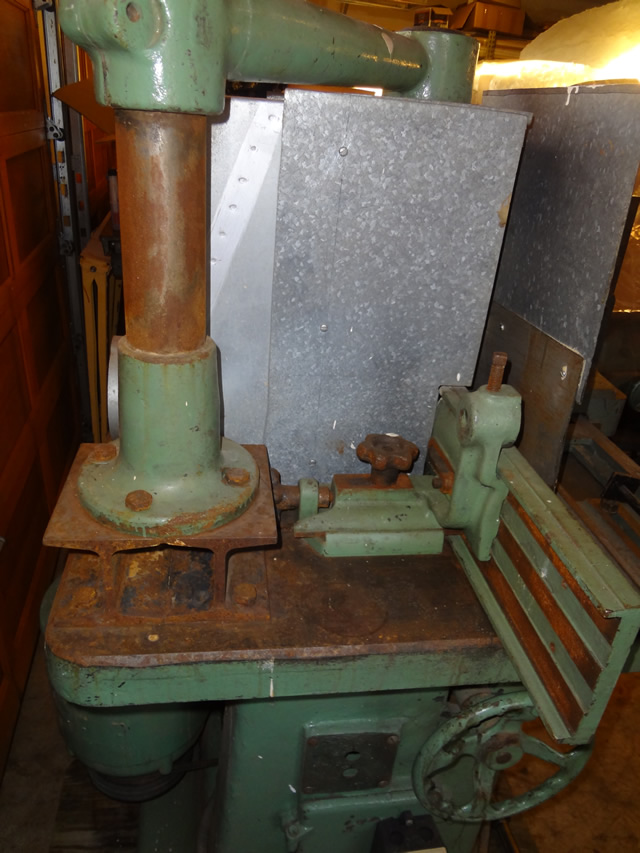
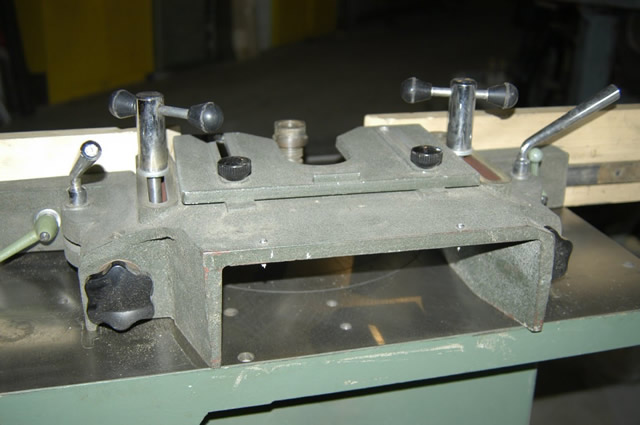
So let’s say you went out and bought yourself a really nice Wadkin PK dimension saw.

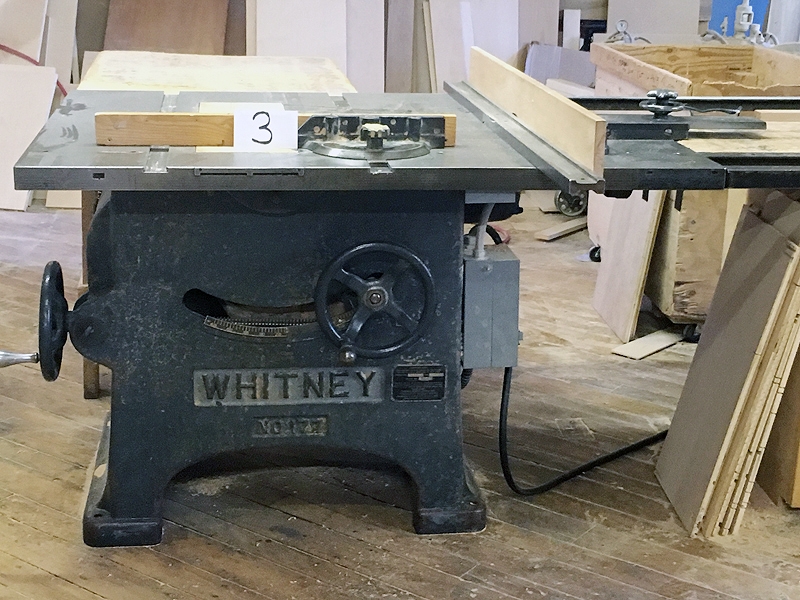
This is the holy grail of table saws (unless you own a Whitney No. 77 Variety saw with a rolling table). Your friends will be so impressed. You take a whole bunch of pictures of the difficult removal and really creative rigging/transport . The saw is now safely at home. You go straight out to your favorite woodworking discussion forum and write a detailed description of the whole process from the search all the way through to the job of getting it unloaded in your shop.

First reply… You suck! (this is supposed to be a compliment. No. Really. It is. Yeah. I’m not buying it either)
Next reply… Nice saw.
And so on, and so on.

Finally someone asks “Hey did you get a quadrant with that saw?”

Huh? What’s a quadrant?

This is the part where someone will inevitably give you a long drawn out description of the missing item complete with “colour glossy photographs with circles and arrows and a paragraph on the back of each one explaining what each one was” (say “Thank you Arlo”)

Your heart sinks.

You run out to the shop and tear through all the parts. There’s a really nice fence, maybe a protractor gauge (just maybe. These are pretty rare too), original guards, but that quadrant gauge is nowhere to be found.

Damn! I hate it when that happens.

Your dreams of the greatest restoration ever have been torpedoed and are sinking like the Lusitania

Now what?

You could just work with the protractor. The truth is that for almost anything you want to do on the saw, it’ll work fine.

What? You didn’t get a protractor either?

That really does suck. (and not in a positive sense)

You could search endlessly for one off another saw (and believe me, it will seem like an endless search). And… if you do find one that is for sale, get ready to sell a kidney. These things are rare and anyone that has one will know what it’s worth (and will want double that).

OK, wait… Before you start checking the going price for a kidney on the black market, there might just be another way.

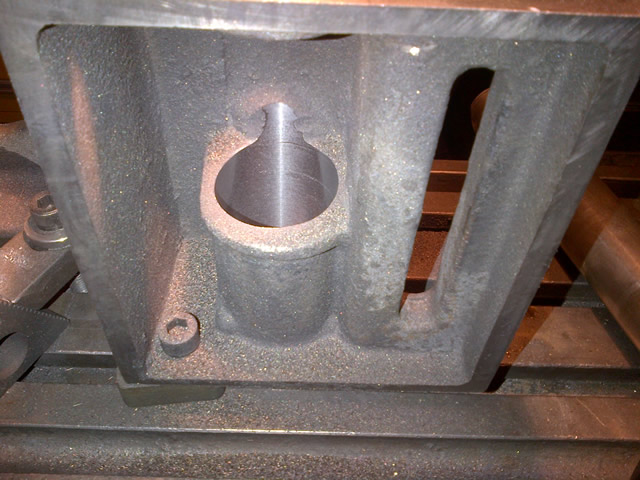
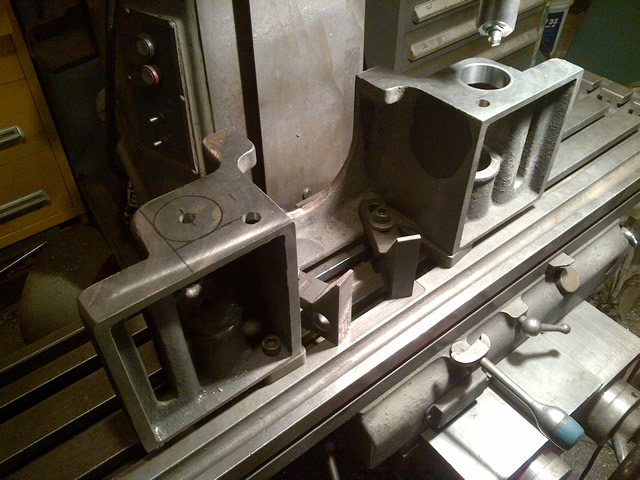
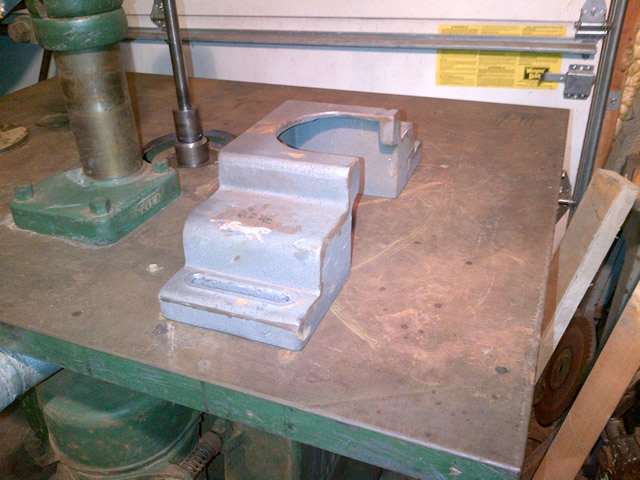
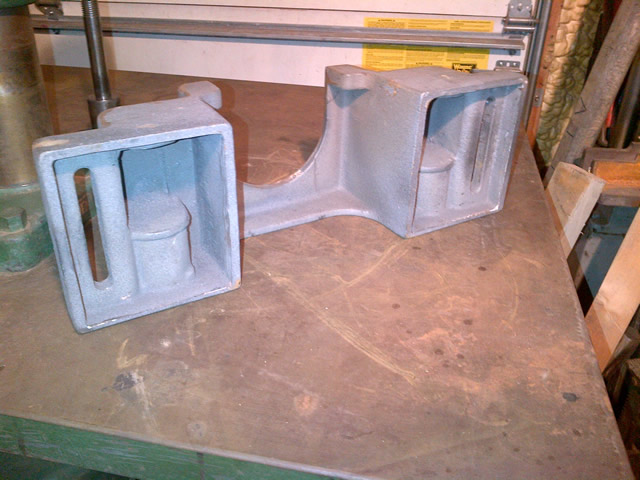
You could find yourself a nice piece of cedar or mahogany, and make a pattern for a replacement gauge. Take that pattern over to your local foundry and have them make you a new piece of iron (or two if you want a split gauge)

Sorry, I don’t have a picture of the pattern as it’s out at the foundry.

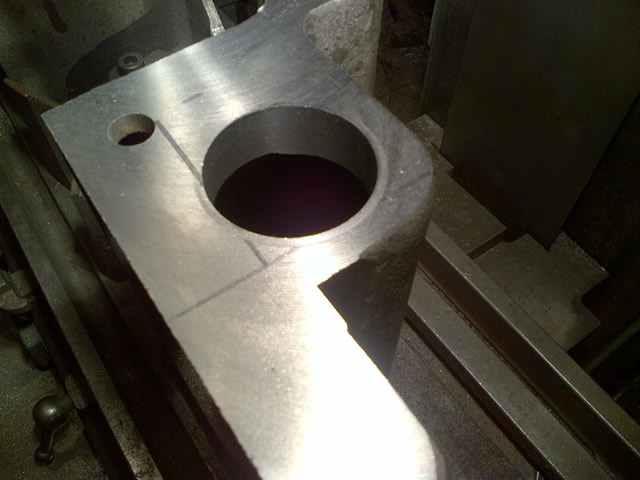
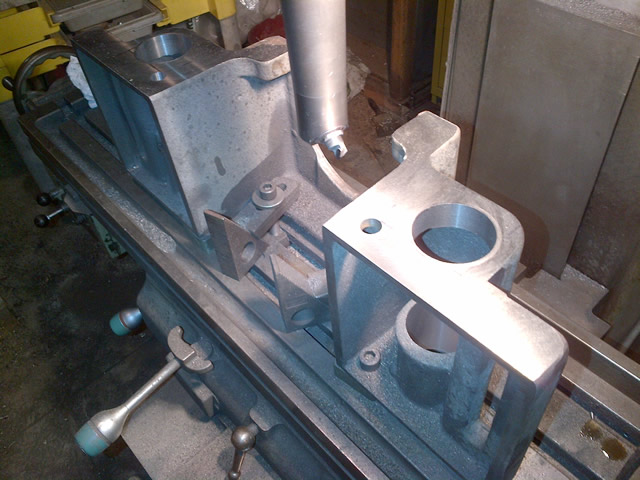
Now you can take that rough casting and throw it up on your Cincinnati Toolmaster mill. Peel the rough exterior away and get it down to nice butterey cast iron. Square it up, face it off, and before you know it something that closely resembles the original split gauge will emerge from that lump of metal. ( If you want to see the face being milled on the quadrant, click on the link in the right side column under “featured video” ).

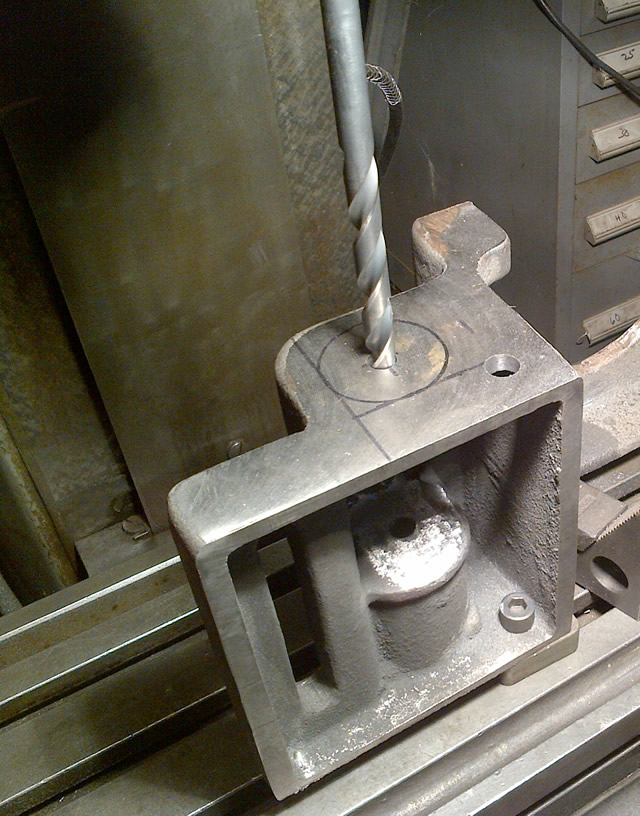
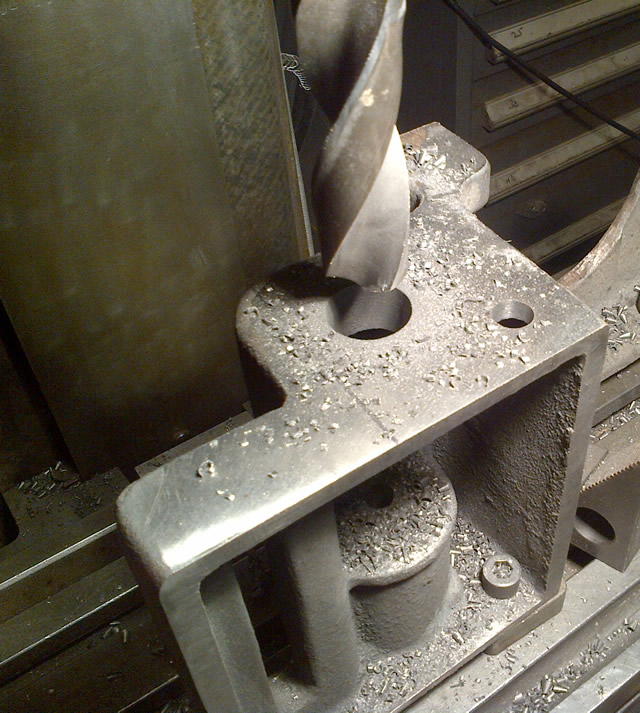
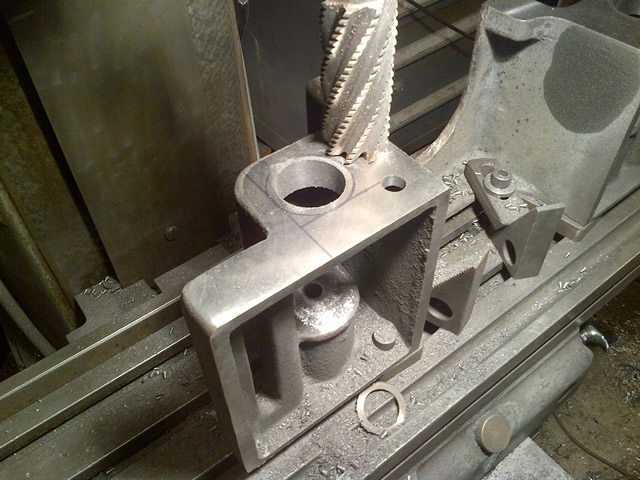
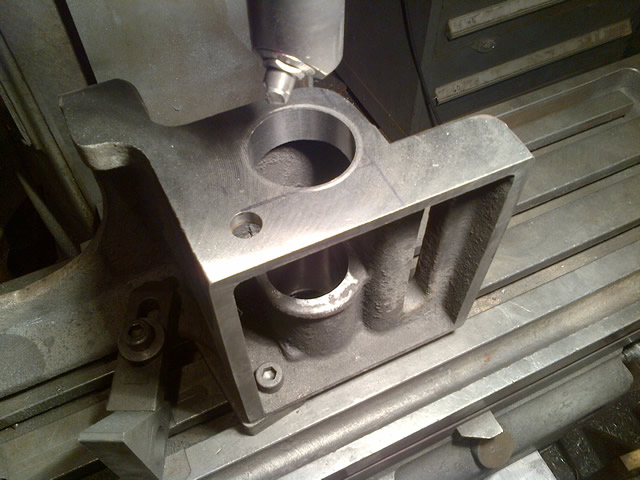
The hardest part of making the quadrant was boring the mounting holes. I made a nice jig out of steel plate to get easy alignment. That coupled with the DRO made for a very accurate fit.

I’m going to have a bit of trouble duplicating the left pin stop (sitting in front of the gauge in the last picture). This is a spring loaded pin that allows for quick stop adjustment. It’s got a cast knob that I also made a pattern for and sent it out to the foundry. For the time being, I’m just using a regular pin through the hole. Truth be told, this works fine. This gauge is a bit heavier than the original, but it is also more durable. It’s far less likely to break if dropped or otherwise abused. I’m going to make a handful more of these gauges because you never know when you’re going to get a nice PK with no quadrant.

Tags: , , , , , ,

The Rarest of the Rare

There’s a hole in my neighborhood down which of late I cannot help but fall -Elbow

Some machines are hard to find. Even impossible.

As scarce as hen’s teeth, as scarce as the truth or as scarce as butter (if you live in Norway)

I spent the better part of the past ten years turning over stones looking for a Whitney scraping machine. I’ve never been able to find a picture of one, let alone the real thing.

Whitney Scraping Machine

Nearly as hard to find was the Whitney sliding table variety saw. In the early days of my affliction, I saw a drawing of a No.77 with a rolling table. I was so intrigued by the style and graceful lines of the saw that ended up on a Whitney binge. I bought every Whitney saw that I could find, ending up with a 50+ collection of these beautiful saws. I finally found a No. 177 with a rolling table in a sample shop at a North Carolina furniture factory. It sold for a tiny fraction of what I would have paid for it. Next a No. 77 with a rolling table came up on e-bay. It was in a pattern shop in eastern Massachusetts. I dug up contact info on the seller and drove through the snow for five hours to meet the owner. I made a deal with him right on the spot. I also ended up with a very nice 26″ American Sawmill Machinery bandsaw. Finally, I came across a stunning example of a very late No. 177 with a rolling table.

Whitney No. 177 Variety Saw with Rolling Table

I now own three of the four Whitney sliding table saws know to exit. I’ve cooled my Whitney table saw buying quite a bit, but still actively search them out, always hoping to find another with a rolling table.

One very rare machine that I never thought I’d get to own is a Whitney Jointer. These are the rarest of the rare. I saw my first Whitney jointer after it was discovered in eastern Massachusetts. It was an older babbit machine that had purportedly been part of the Whitney pattern shop at the foundry in Winchendon. The machine was eventually sold to a collector in Tennessee. I had an opportunity to see it in person while it was in storage. It has wonderful lines and an intriguing double wedge design.

Whitney 16

I always thought this was a prototype and had never been mass-produced. Sadly, no other example of this machine has been found. There had been a rumor that another came up at auction in Ohio in 2005, but that was unsubstantiated. Late last Summer a Whitney jointer came up for auction in Virginia. My first impression was that this was actually a Newman jointer that had been badged Whitney. I nearly passed it up, but as usual my good friend Barry talked me into taking a harder look at it. Upon closer inspection I came to the realization that this machine had been manufactured in the mid to late 30′s by Whitney in Winchendon. This was a direct drive 16″ jointer. Complete and in its original paint. Surprisingly I was able to acquire this machine for a fraction of what I had expected to pay.

Whitney 16

I’ll do a complete write-up on this machine at some point, but for now.. on with the article….

Back in 2007 I went to an auction at a pattern shop in Pottstown, PA. In that shop was a Wadkin WL pattern mill. I was amazed by the quality, workmanship and attention to detail of this fine machine. Also included in this sale was a cabinet full of tooling for the mill. I really wanted to buy the machine, but hedged at the last-minute. This was mostly because the auctioneer was an unsavory character, but also because I already owned an Oliver No. 103. I regretted that decision for the next four and a half years. I searched high and low for another mill. I chased leads in the UK, Australia and South Africa. None of them panned out. Late last summer I came across another mill in Southern Wisconsin. This machine was complete with two tooling cabinets and a number of hard to find spares ans accessories. I had to bid over the phone, but ended up buying the mill for the lofty sum of $950 (including all tooling and accessories). As soon as the bidding was closed, I jumped im my truck and drove 14 hours to pickup the mill. I was mostly concerned about the tooling growing legs and disappearing. I arrived at early the next morning and met the scrap guy arrange removal. As soon as I entered the building, I was stunned to see two additional Wadkin mills. The scrapper told me that he had purchased them before the auction. Amazingly, the scrap guy only wanted what he paid for the machines. I ended up making a deal to get the two remaining machines and the use of his forklift for removal for $1500.

Back in 2005 I ran across a Wadkin PK sliding table saw on e-bay. As far as fit & finish goes, these saws are the best of the best. The saw was located in Canada and had a very steep price on it. I pursued it for some time, but couldn’t get the seller to agree to a price I was willing to pay. I searched tirelessly for one for the next six years. Finally in 2011, I decided that I had to start looking outside north america. I was pretty quickly able to find a beautiful saw with a large right extension table and an extended table to the left of the blade. The entire saw is almost 8′ wide. I bought the saw for less than a quarter of what was being asked for the canadian saw.

Wadkin PK Dimension Saw with large rolling table extension

I then started the long process getting the saw exported to the States. It finally arrived three months later, but was well worth the wait. I gained enough experience in the process to set myself up as an importer. As with everything else, Wadkin PK’s started falling from the sky. I ended up buying two more in England and one in Texas. I’ve got a few more in the pipeline. I doubt that I’ll get anywhere near the number of Whitney saws, but who really knows what you’re going to do until you end up in that situation?

I’d be remiss if I didn’t Show a picture of Jack Forsberg’s Wadkin PK. He takes restoration to a whole new level. His saw is another great example of how these machines turn up out of nowhere. When Gibbard furniture went into receivership, they hired a small-time auction company to liquidate the assets. There were many Wadkin, Whitney and other industrial machines in that place. All sold for a pittance. I didn’t hear about the sale until after the fact. Good thing for Jack. I would have bought the entire shop.

So… the point of the article? These machines are out there. If you’re vigilant, willing to wait and put in the work, whatever it is, it will come in spades. Be prepared to drive long distances, sleep in your truck and drive a harder bargain than the seller. In the mean time, if you come across a Whitney scraping machine… call me first.

The owwm

Tags: , , , , ,

Pierre Benite Shaper

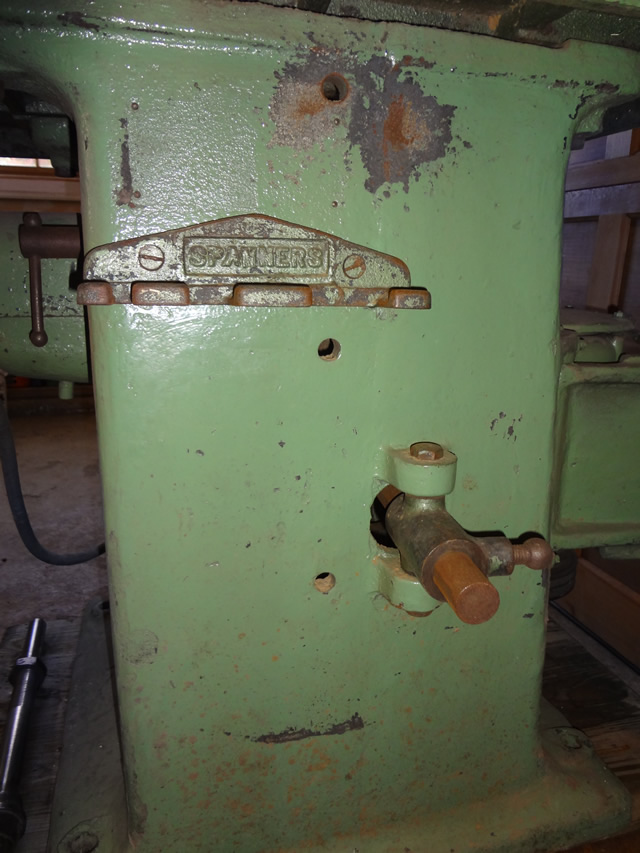
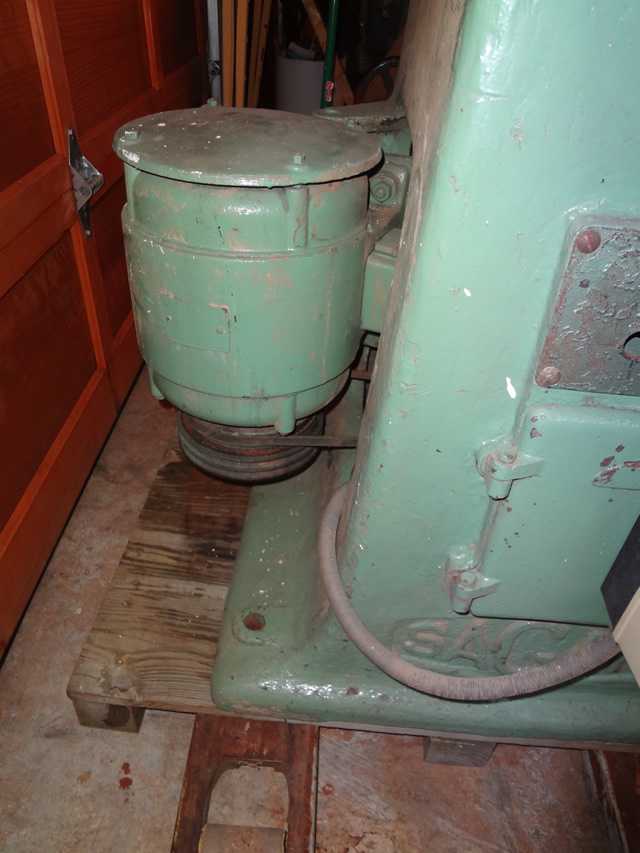
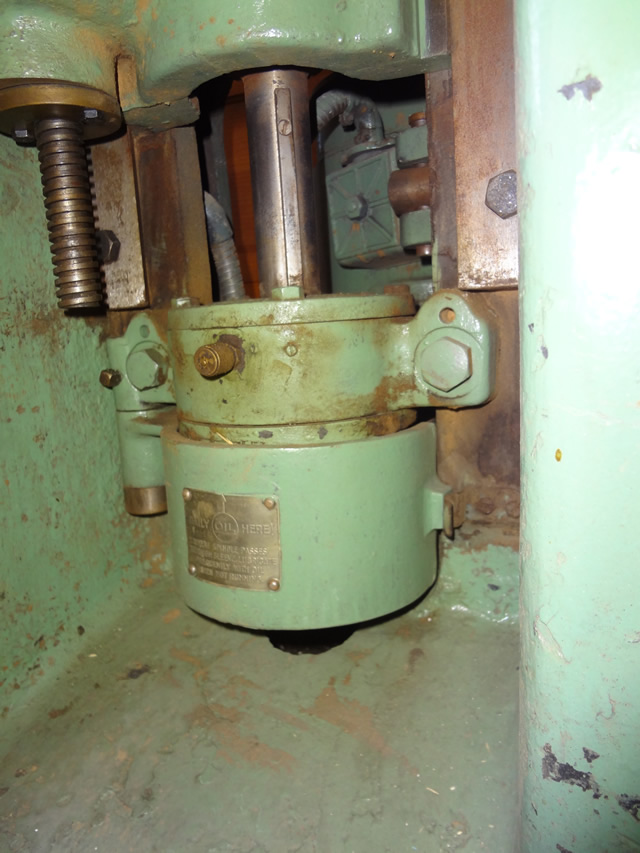
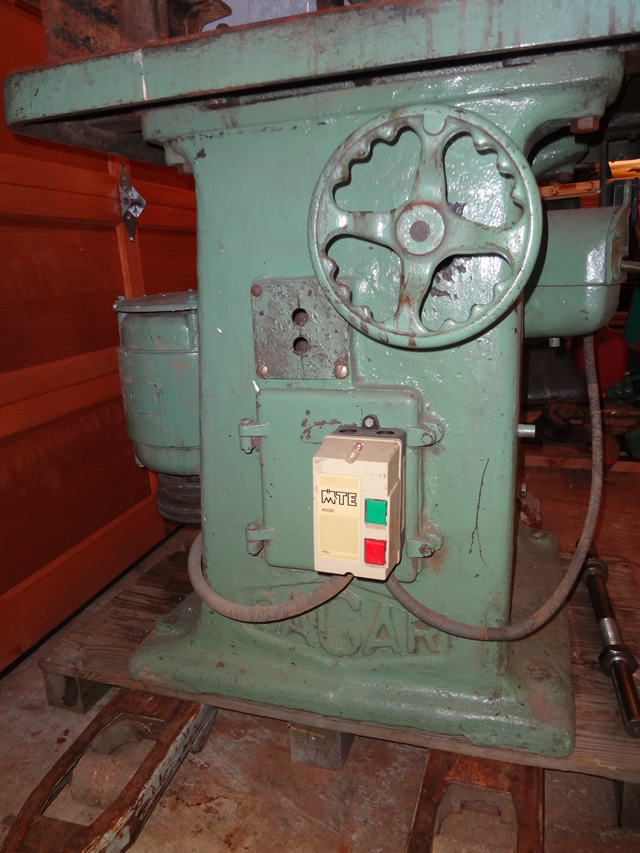
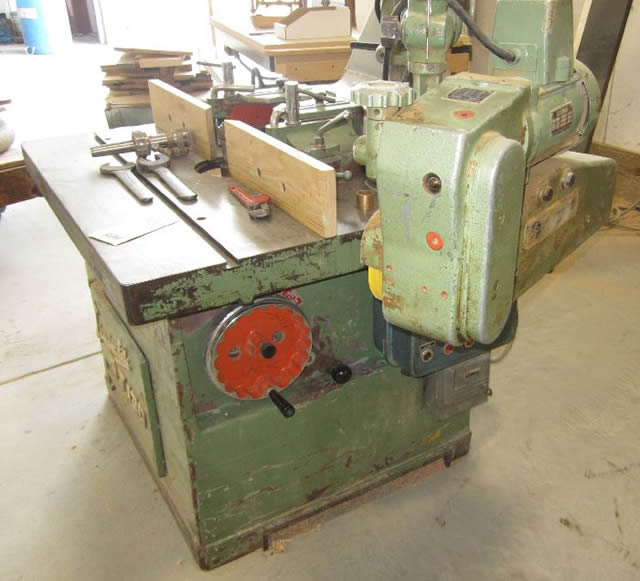
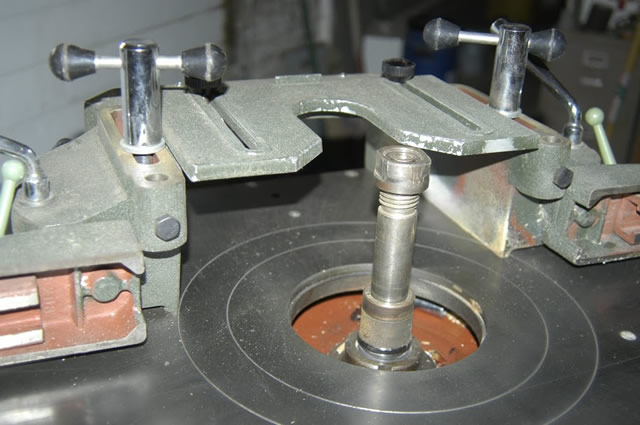
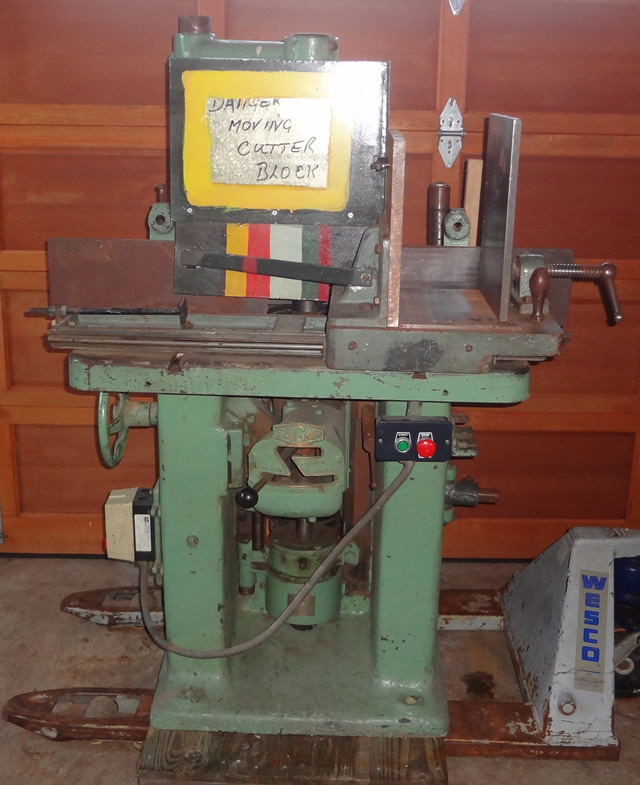
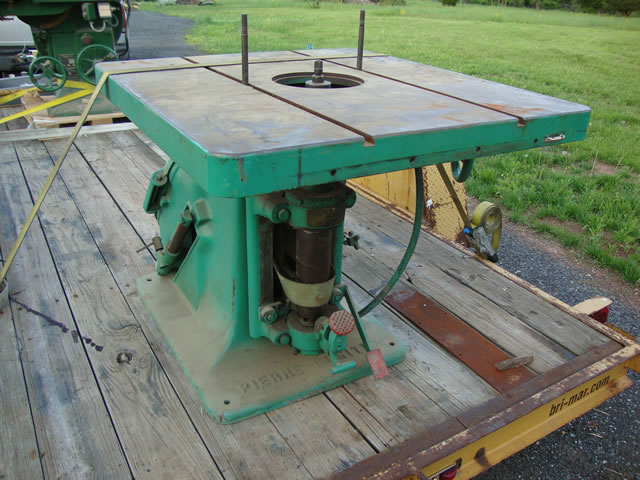
I found this shaper through a craigslist advert in Belaire, Texas last summer. I purchased the machine sight-unseen as part of a package deal with a Wadkin PK sliding table saw. I had both machines shipped via common carrier from Texas to New Jersey. The total freight bill for both machines was $402 (inclusive of insurance). I couldn’t work out a delivery schedule with the carrier so I decided to pick both machines up at the terminal in Edison, NJ. I noticed that the forklift operator was having a difficult time moving the skid with the shaper off the dock. When he finally got it on the forks and brought it over to load, the reason for his trouble was apparent. The skid had been reduced to matchsticks and was only being held in place by the remaining slats and the strapping over the top of the shaper. Upon close inspection, it appeared that the only damage to the machine was to the fan-cover of the motor.  We removed the shaper from the skid and strapped it to the trailer. The Wadkin saw had also had a rough trip, but the skid was still intact and there was no visible damage to the saw. The shaper is a substantial machine with an extremely heavy cast iron base and very heavy table. The spindle cartridge is also extremely heavy with substantial bearings at both ends of the spindle. The bearings run in an oil bath. The spindle is 2″ in diameter and 7″ capacity under the cap nut. The spindle is a slotted “french” type arrangement with a retaining cap, screw and nut. The machine is three speed, adjusted by moving the flat belt on a stepped pulley on the motor. The tension on the belt is relieved by moving a handle on the side of the machine. This slides the motor up an incline to loosen the belt and allow speed changes. The shaper is also equipped with a foot brake and spindle lock. The original fence is missing, although the mounting bolts and dovetail blocks/nuts are still mounted on the table. The original fence would have been the european style split type fence. This is the same type of fence used on the early Wadkin spindle moulders. The shaper was manufactured in France and exported to Quebec. How it ended up in Texas is a bit of a mystery. The shaper came with an indexable carbide planing/jointing head. The spindle is 2″ in diameter. The spindle is raised and lowered via a handwheel. The handwheel is geared to a jack screw that moves the spindle cartridge in in dovetailed machine ways. The hub of the handwheel is fitted with an incremented scale and associated pointer to provide accurate measurement of movement. This is the first French made machine I’ve ever come across. Everything about it is impressive. The French spindle is a bit of a concern, but at 2″ diameter, I wouldn’t have much of an issue turning it down to 1-1/4″ and threading it for a regular nut. For now, I’ve got the shaper stashed in the carriage house. I’ll get it out and mess around with it after the weather breaks. Looks like it’ll be an interesting machine.

The owwm
 

Tags: , , , ,

I found this Wadkin EP shaper on e-bay this morning. Interestingly, the table appears to have been rotated 90 degrees counter clockwise. This basically moves the operator position to the right side of the shaper. I’m trying to figure out why you’d do this.

The shaper on the left is the machine in question. The shaper on the right is the same model from the 1936 Wadkin catalogue. This setup looks like it would be pretty uncomfortable to use (no overhang, handwheel/spinner at gut/groin level).

The owwm
Tags: , ,

I’m starting to experiment with pushing content from the Blackberry. The WordPress BB app is very basic, but really easy to use. The picture below was taken with the blackberry. Much better quality than I expected. I’m hoping to get alot more use out of this and should be able to update the site alot more frequently. After spending the better part of the last two days upgrading this site, I decided I better take the time to pull some firewood together. It’s been a very mild winter with almost no snow and temperatures reaching 50 degrees a few days a week. I was still getting by with firewood from last season (hoping to have enough to get through this month). It turned markedly colder this week and is actually begining to feel like February in New Jersey (we didn’t break freezing today; hopefully not a sign of things to come). I managed to scrape enough wood together to keep us going for another week. It looks like we’ll be back up to 50 degrees again by the end of the week.
My little JD 790

The owwm

Tags: , ,

I’m afraid the upgrade from Textpattern to WordPress has left the site looking a bit like a ransom note. I’m not sure whether I’ll be going through the old posts and correcting errors or if I’ll just let them be. It looks like the content is all there, just not as pretty as I’d like it to be. Unfortunately, the WordPress import tool doesn’t handle article images or block quotes very well (features that I used extensively on Textpattern). Going back and adding these features to the existing articles will be pretty time consuming. The good news is that the new site has some pretty good features including the ability to post via e-mail. This feature alone was worth the upgrade as it will give me the ability to send content directly from my Blackberry. Feel free to leave comments on the new design. You can also sign up for alerts via e-mail or follow the site with RSS.

The owwm

Tags: , ,

On June 21st, 2010, Maynards hosted the on-line liquidation of Cole Pattern & Engineering in Fort Wayne, Indiana.

 
This is another sale that I stumbled upon while searching for Wadkin parts. The only item I was interested in was a Wadkin WL 20 vertical milling machine. This mill is much bigger and heavier than any machine I’ve owned. It has a gross weight of 14,450 LBS, and is just under 11′ tall. I’ve recently run up against the limitations of my Toolmaster mills. In particular, the throat capacity and the longitudinal movement have both come up short on a few projects I have waiting. The WL 20 has an impressive throat capacity of 35″. It also has a longitudinal movement of 48″ and a transverse movement of 31″. A few other great features of the mill are the 360 degree power rotary table and the 300 degree swivel on the column.

There was a very generic description (“Wadkins Vertical mill 26″ x 48″ table and DRO”) and a single photo of the mill in auction catalog.

I couldn’t get to Fort Wayne for the preview, so I tried calling the auction company to get confirmation on the model/serial numbers of the machine. I reached the on-site handler, but he didn’t have phone service inside the building. He agreed to look at mill and call me back the next morning. The call never came and I was pretty nervous about whether I’d be able to get the mill out of the building and then trailer it the 600 miles back to Jersey. I decided to drop a $350 bid on it and do a wait and see on the rigging and transportation. The worse case scenario is that I’d strip the DRO and tooling from the machine and sell the hulk to the local scrap dealer.

…………………………………

As it turned out, my $350.00 was the only bid. I now had to turn my attention to figuring out whether it was even possible for me to get the mill rigged out, loaded and trailered home. My bigest concern was the weight. My trailer is only good for 10,000 lbs. This mill obviously weighed all of that if not substantially more. To make matters worse, the removal period was five days. This meant I’d have to take a few days off work. I called the auction house several more times, but wasn’t able to reach anyone on-site. I did some on-line searches for documentation on this mill and started comparing pictures in an attempt to verify the model number. After all of this, all I could confirm was that I had a WL.

…………………………………

Two days before the final removal date, I decided to make the drive to Fort Wayne. I left Central Jersey at 4:00 AM and arrived at 2:00 in the afternoon. Most of the smaller machines in the sale had already been removed. There were a number of very large mills, CnC lathes and other miscellaneous machines still in the building. There was alot of activity around collecting the aluminum, steel and brass scrap. So much so that I had a difficult time finding anybody that would even discuss the removal.

When I finally located my mill, I was surprised to find a folder with all the documentation for the mill sitting right on the table. The first thing I did was open to the specifications page. The net weight was listed at 12,500 Lbs for the basic machine and 14,500 gross weight with all the options installed.

I found the on-site guy from Maynards and asked him about forklifts. He advised me that the only lifts available were rated for 5,000 Lbs or less. Given that I was only in town for the day, I decided to find the local scrap dealer. As it turned out, he was less than a mile away and agreed to come back to the plant to look at the mill. He agreed to buy it from me, but only if I could get it moved outside the building. Since none of the forklifts were big enough to remove the machine, I resigned myself to abandoning it. I started packing up the tooling and getting ready to strip the DRO and scales from the machine. About 30 minutes into the process, a forklift rental company truck pulled up and unloaded another forklift. After the driver left I went over and checked the lift out. It was small in size, but was rated for 33,000 Lbs.

It was almost 4:00 PM and everyone had left. I went and found the auction guy and asked him about the lift. He told me that one of the riggers had it delivered for a pickup the following week. I asked him what it would take for him to let me use the lift for an hour.

Auction Guy: Do you know how to run that lift?
“Absolutely.”

Auction Guy: Will that forklift pick that mill up?

“Absolutely.”

Auction Guy: OK. I’m going to dinner. The key’s in the lift… try not to break anything.

It took me less than 10 minutes to get the mill up on blocks and another 5 minutes to get it out into the parking lot. Once outside in the daylight it didn’t seem so big. I decided I should try setting it on the trailer and see how bad it looked. I had to move it around several times, but finally got it into a position where it looked like it would ride pretty well. I drove the truck around the parking lot a few times an was surprised by how well it was riding. I spent the next hour tying everything down and packing up the tooling.

By the time I finished, the auction guy showed up. I gave him fifty dollars and thanked him for his help.

…………………………………

Pulling out onto the highway, I could tell that this was a real load for my little truck. This wasn’t the heaviest load I had ever pulled, but it was the heaviest load I had ever pulled this far from home.

About 15 miles on my way, I stopped for fuel. After I got the pump going, I checked the trailer tires. The tires on the front axle were so hot I couldn’t hold my hand on them. At that point, I realized that I’d have to go alot slower (at least until the roads cooled down).

The trip home was gruelling. The worst of it was the hills along I-80 in western PA. I was slowing down to 35 MPH on every clim and speeding up to 70 going down the other side. I passed several open weigh stations along the way. I was surprised everytime that they didn’t come after me.

…………………………………

I finally arrived in Jersey the next morning at 10 AM. Happy to have made it home safe, I set my sights on getting the mill off the trailer. My Hyster is only rated for 5500 Lbs, so I had to go next door and get the Lull.

I rigged the mill with pipes through the base and used nylon straps over the top of the boom. The straps were rated for 12,000 Lbs, but one of them snapped as soon as I put pressure on them. I noticed that the front of the base had four large holes tapped on both sides. I remembered that my Wakin moulder had a set of lifting hooks bolted to it. Fortunately, they fit the mill. A few minutes later I had it rigged up with chains.

In order to position the boom over the base, I had to approach from the rear of the trailer and get the forks on either side of the column. With the mill positioned at the front of the trailer, this meant that the boom was extended about 10 feet. When I tried to lift the mill, the rear wheels of the Lull came off the ground. To get around this, I laid some heavy timbers on the deck of the trailer and retracted the boom. the mill slid back; turning the timbers to toothpicks on the way. Once it had moved back about four feet I was able to get it lifted off the trailer enough to drive out from under it.

Getting the mill into my building wasn’t as much of a hassle. I have a set of 14 foot wide doors at the back of the building. I was able to drive the lull directly inside and set the mill within eight feet of it’s final resting place. I used skates, wrecking bars and a railroad jack to get the mill positioned and set down on the leveling plates. The nice thing about this spot is that it is close enough to the door that I can use the forklift to put heavy workpieces on the table.

This mill will be a great addition to the shop. The first project I have queued up for it is a rolling table I had cast for an L. Power single end tenoner.

…………………………………

There were alot of other great machines in this sale:

This Tegle & Sonner jointer sold for $475._

…………………………………

This Martin planer sold for $3750._

…………………………………

This Kindt Collins 30″disc sander sold for $1100._

…………………………………

This DoAll metal bandsaw sold for $1025._

…………………………………

And this American 36″ Bandsaw sold for $150._

…………………………………

There were also several other milling machines that sold at reasonable prices:

Lagun Vertical mill With Anilam wizard 211 DRO $575._

…………………………………

Lagun Vertical mill With DRO Model# FTV25 $725._

…………………………………

Lagun Vertical mill With Sony DRO $600._

…………………………………

Ekstrom Vertical mill With DRO Model# 540 $250._

…………………………………

Bohner & Kohle With DRO Model# MFI $1900_

…………………………………

And finally, the machine I most regret not buying:

Veet Precision Radial Drill that sold for $250._

…………………………………

click here If you’re interested in seeing the complete results for the auction.

One thing I noted was that although many of the large machines were sold on-line, they were still up for grabs when I went for removal. Any of the CnC machines could have been had for scrap value after the auction. The scrap guy I spoke to was working a deal with the foundry to get most of the mills (large & small) and a bunch of the CnC machines.


The owwm

Tags: , , , , , ,

Shameless Commerce

  • e-mail me with questions on any of the items listed below:

 
The owwm


Buffalo Forge No. 18 Free-Standing Drill Press
I have a few Commander and Aggregate heads available for this as well.
Make me an offer

(***Sold***) Tannewitz JS-250:Tannewitz Sliding Table Saw
5 HP 220 Volts 3 Phase
Rebuilt Motor
Rack & Pinion Fence
Miter Gauge
Quadrant
New Dust Door
Serial Number: 10051

…..

…..

…..

…..

…..

.

Tags: , , , , ,

On May 26th, 2010, Koster Industries hosted the on-line liquidation of Peerless Aluminum Foundry in Bridgeport, CT.

I happened upon the on-line ad for this auction while searching for some Wadkin parts (the day before the sale). What caught my eye was a Wadkin RU lathe. The RU is a pattern makers lathe with a sliding gap bed. These lathes are fairly rare. I’ve only seen one other RU in North America, and it sold for an outrageous amount on e-bay a few years back. Unlike traditional lathes where the gap is removed to increase the swing, the real purpose of the sliding bed was to increase the capacity between centers without making the machine too long. The lathe has an 18″ swing and 72” between centers with the gap closed. With the gap open, it has a 36″ swing and 99” between centers. The RU also features a geared headstock with oil lubrication. The head is driven by v-belt from an electric motor mounted on the back of the machine. Here’s an illustration of the RU from the Wadkin catalog:

.

Also in the sale was a Wadkin RS1632 pattern makers lathe. Although slightly smaller than the RU, the RS has an impressive swing of 16” standard, or 32” with the gap section removed. This RS has 68” between centers . This lathe has a two speed 1.5 HP motor giving it a total of eight speeds ranging from 200 to 2880 RPM. The headstock on the RS is driven by a set of opposing step pulleys. A foot pedal lifts the motor and removes tension from the drive belt. This allows the operator to easily move the speed lever without undue strain on the belts. Here’s an illustration of the RS from the wadkin catalog:

.

The auction photos were limited, but did provide enough detail to show that both machines were complete.

_The RU:_

_The RS:_

…………………………………

Also included in the catalog were several older pieces of woodworking machinery including a State spindle sander, a Yates double disc sander, a Crescent 24” planer, Kindt Collins disc sander, a Delta table saw, a Delta bandsaw, a Crescent 16” jointer, a Tannewitz 30” band saw and a number of work benches with pattern makers vises attached.

_State Spindle Sander_

_Yates Disc Sander_

_Crescent P-24_

_Delta Table Saw_

_Delta Band Saw_

_Crescent Jointer_

_Tannewitz PH 30_

_Work Benches with Emmert vises_

…………………………………

The lathes together with most of these machines were located in the pattern shop on the second floor of the warehouse building outside the main foundry. Posted on the auction page was this ominous warning:

??Note to bidders: Lots 4 thru 33 are located on the second story of the building. There is no elevator or hoist in working order and the items would need to be removed thru bay floors opening to the outside. There is an i-beam that would facilitate a manual chain fall. It will be the buyers and or riggers responsibility to supply the same and remove.??

I couldn’t make the preview, so I tried phoning the auctioneer to find out just how bad the removal situation was. The auctioneer passed me the number of the on-site contact. He confirmed that the lathes were on the second floor of the building and that the only way to get them out was with a chain fall on a crane beam. Unfortunately, the beam only extended 5’ outside the building and had no end support. It also wasn’t clear how the beam was supported on the window header. The prospect of swinging a 10’ lathe weighing ~3500 LBS out a second floor window (on an unsupported beam) gave me pause. Given this, I made the assumption that the bigger lathe would need to be disassembled to get it out of the building. The smaller lathe would be easier, but would still require some work to get it out on the beam and then get it lowered onto the trailer.

…………………………………

The auction prices were generally low. The State spindle sander brought $420, the Kindt Collins disc sander brought $460, the Delta band saw brought $220, the Yates disc sander brought $430, the Delta table saw brought $320, the Tannewitz band saw brought $220, the Crescent planer brought $625, the Crescent jointer went for $175, and the work benches with the Emmert vises sold for $720. Almost all of the foundry equipment went for scrap.

click here If you’re interested in seeing the complete results for the auction.

I ended up buying the Wadkin RU for $1360, the Wadkin RS for $260 and a Norton surface grinder for $10. The on-line auction had an auto extend feature that pushed the end time out 10 minutes every time a bid was placed. Most of the items ended quickly, but the Wadkin RU kept getting extended. The time would run down to a few seconds left and a single bidder would throw another ten bucks on it and extend it again. It finally ended after 90 minutes of back and forth. Several days after the sale I learned that the other bidder was my good friend Barry. Here’s a direct quote from an e-mail he sent when he found out that I had won both lathes:

_”You motherfuckin sonofabitchen goddamnbastardcocksucken pissshitfucken machinebuyin motherfucker.”_

After his initial anger and sore loser hissy fit subsided, he started trying to convince me that he _”saved”_ me a bunch of money by not running the price any higher.

…………………………………

I made the trip to Bridgeport for removal a week after the auction. The location of the machines and the crane beam were pretty much as described:
_Pattern Shop_

_View from the far end looking toward the door:_

Very few of the other machines had been removed. The disc sanders were gone, as was the jointer and the work benches. The Delta table saw, band saw and the Crescent planer were still there. There were also two bridgeport mills and some radial drills. Given that it was the last day for removal, I assume most of those went for scrap.

Fortunately, there wasn’t too much in the way of obstructions between the lathes and the door. I had to move some smaller items out of the way and sweep the floor, but it was a pretty straight path.

Here are some Photos of the lathes in the Pattern Shop:
_Wadkin RU … headstock end_

_Wadkin RU … tailstock end_

_Wadkin RS …_

I was happy to see that there was a bunch of tooling and accessories for these lathes. This included tool rests, face plates, centers, cutting tools, tool holders and two outboard stands.

Here are some pictures of the varoius tooling and accessories:
_Tooling & Accessories_ …_

_Face Plate_ …_

_Tool rests and custom cutters_ …_

The RU had been leveled with aluminum wedges and set in grout. I had to break up the grout around the base to get my oak wedges under the base. The base under the tailstock had also been filled with grout. This was a bit more of a job, but I was able to break it up with a shale bar. Using the wedges and a hooked bar, I was able to get the lathe up high enough to get a pallet jack under the headstock end. Next I jacked up the tailstock end and put a dolly under it. Using the pallet jack, I was able to drag the lathe to the door. I used thed the same method to get the RS to the door. This entire process took just over an hour. I wish getting them out of the building had been as easy. I won’t go into the details now, but it ended taking the rest of the day just to get them rigged up and lowered onto my trailer. Fortunately, I was able to do this without incident and without disassembling the RU.

Here are some photos of the RU back at my shop:

_RU in my shop_ …_

_Tool holder, compound, headstock_ …_

_Tailstock_ …_

I plan to keep the RU and eventually get it setup in my shop. I’ll probably part with the RS at some point in the future. This acquisition also means that I’ll probably have to part with my Robbins pattern makers lathe.

_Robbins Pattern Makers Lathe_

The owwm

Tags: , , , , , , , , , , , ,

On December 5th, I attended the public auction of the Gorham Silver Factory in Egg Harbor City, New Jersey. The plant consisted of machinery and tools that had been consolidated into the New Jersey location as other plants were closed. The auction was hosted by Jay Sugarman Auctioneers out of Miami Florida. They were scheduled to sell the entire operation in one day. There was no woodworking machinery listed in the sale, but there were a number of Stanley Vidmar cabinets. I’ve been hoping to get some of these for awhile, so I figured it was worth the two hour trip to southeastern Jersey.

The sale started with several hundred lots of miscellaneous tools. The pricing on these items was exceptionally good. I picked up a complete [SKF] bearing puller kit that was still shrink wrapped for $35. I also ended up with a urethane belt splicer for $15, a second bearing puller kit for $10, a box full of wheel/bearing pullers for $45, a pipe flaring kit for $15, a 5 ton toe jack for $25, a complete set of morse tapers for a milling machine (new in boxes) for $5, a needle scaler for $5, a very nice Starrett dial caliper for $15, an SK 3/4″ socket set with breaker bar for $25, and a few box lots of misc tools for $5 each. Next they moved on to selling a bunch of tool boxes, cabinets, and rolling carts. I ended buying eight RubberMaid rolling carts with toolboxes for $12 each.

Three hours into the sale and we were just getting to the maintenance department. This is where prices took a serious upturn. There were 30+ cabinets full of parts, hardware, etc. The auction brochure called for the contents to be sold separate of the cabinets. For whatever reason, the auctioneer decided to sell each cabinet with the contents as a single lot. About half of the cabinets were Stanley Vidmars:

Bidding on these cabinets was intense. Every one of them sold for between $600 and $1200. I ended up not buying a single one.

Next up was the machine shop. There were a few nice machines here, including a 26″ DoAll bandsaw with power feed table. The saw was in good condition and included a contour attachment. It sold for $550. There was also a very nice Cincinnati Tracer Mill:

This machine was exceptionally tight. It included two milling vises, two rotary tables, a cooling pump and a hydraulic power supply. The mill sold for $450.

I bought a very nice little 25 Ton Die Press for $125, two granite surface plates for $10 & $25, three two door shop benches/cabinets for $15 each, and all the dies for the press for $15. I also ended up buying two metal storage cabinets that were full of shop vac filter, scotch brite pads and sandpaper for $65.

The sale then moved outdoors to sell a loader, a telescopic boom manlift, and five dust collectors. It was snowing, so only about five people came outside. Once the loader and the manlift were sold, that number dwindled to three. I bid on the first dust collector and figured out pretty quickly that the scrap guy wanted it alot more than me. I didn’t bid on the remaining units, and they all sold for $300 each. Right after the bidding ended, I approached the scrap guy and asked him if he wanted to sell the cyclones. He responded positively and we made a deal for the Torits pictured here:

The auction resumed inside at the forge. Prices on these items were generally low. The forges themselves brought $100 each.

The manual drop hammers sold to the scrap guy for $100. These were really neat machines. They can’t be seen in the pictures, but all of the dies for spoons and other utensiles were included under the benches.

Also in this area was a really nice set of antique anvils. There was alot of competition on these and they ended up selling for $850. The auctioneer kept making me cringe by picking up each hammer and striking the top of the anvils.

The only item I purchased in this area was this EC single spindle buffer. It has a really nice surety guard that is lighted from the back. It sold for $35.

Next they moved on to selling the machinery. These consisted of mostly drop hammers, tinning presses, knuckle presses, rolling mills and a plating line. Nearly everyone of the drop presses sold for scrap at $100 each.

The same was true of the tinning presses. All brought $100 from the scrap man, except for a few Bliss presses that went for $3500.

The smaller knuckle presses sold for scrap as well at $100 each. The 600 ton unit brought alot of interest and sold for $3200.

The rolling mills, plating lines, polishers, etc all sold for scrap. Some of them brought decent money. This was mostly due to the high brass content in the plating lines.

The rest of the auction was misc machine parts, motors, storage tanks and junk that was piled in the last section of the building.

Initially, the motors brought pretty good interest. The first two sold were 550 volt 50 HP. They sold for $300 each. Then the auctioneer put the remaining motors up as a single lot. There had to be 100+ motors. They ended up selling for $2200 for the lot. Many of these were new in crates.

Also of interest in this area were two skids of EC single spindle buffers. These sold as a single lot for $100 to the scrap guy. I did manage to talk him into letting me take the extension spindles off of these before he trashed them.

The auction ended in a storage room off the area with all the junk. This room had large tanks for storing ceramic material. I managed to buy a 15′ fiberglass step ladder for $100, and another 10′ step ladder for $35. Way back in the corner of this room was the only piece of wood working machinery in the sale. It was a large Holz sliding panel saw. I bid on it, but ended up letting it go to the scrap guy for $450.

I liked the way the auctioneer conducted the sale, but things got very difficult starting with checkout. As soon as the sale was over I made a bee-line for the office to pay my bill. The girl running the checkout was doing all of her work from hand written receipts that had been given to her throughout the day. She would take these receipts and manually write out a bill. None of this was done in advance. I was told to leave my number and that I was 6th in line for checkout. They said I could wait outside, but that I couldn’t move anything until the bill was paid. I waited the 90 minutes until my number came up and then sat at the desk and waited another 20 minutes for my bill to be completed. Once the bill was paid, I went out and started collecting all of the small items as I was worried they might be spirited away. I hadn’t been doing this for more than five minutes when the auctioneer came by and said that everyone had to be out of the building in 15 minutes since they were all leaving. I quickly gathered up all the small stuff and went to checkout. The guy at the door then had to inspect each item and verify it against the yellow slips of paper. He would tear the corner off of each slip as he found the item. I ended up leaving all of the rolling carts and large tools for the next day. When I finally did get outside, I was surprised to see that it was still snowing. There was three inches on the ground and it was still coming down pretty good.

When I got back the next day, things looked completely different. All of the tables, carts, and some machinery had been moved. I quickly realized that some of my stuff was missing. It turned out to be one set of pullers and a few carts that had disappeared. The auctioneer made good on these by giving me four carts that were not in the auction, one granite surface plate and another urethane belt splicer. I also managed to buy a large heat exchanger that weighed at least 600 lbs for $25, a large welding table for $25 and a few rolling dumpsters for $100 each.

One final note: The toy soldier at the top of this article was on a key chain handed to me by the maintenance man at the factory right after I bought the cabinet full of filters. I didn’t think much of it at the time. When I got home, I took a closer look at it and discovered that it was made by Gorham at the Pomona plant. It’s made of sterling silver.

Tags: , , , ,

Older Posts »